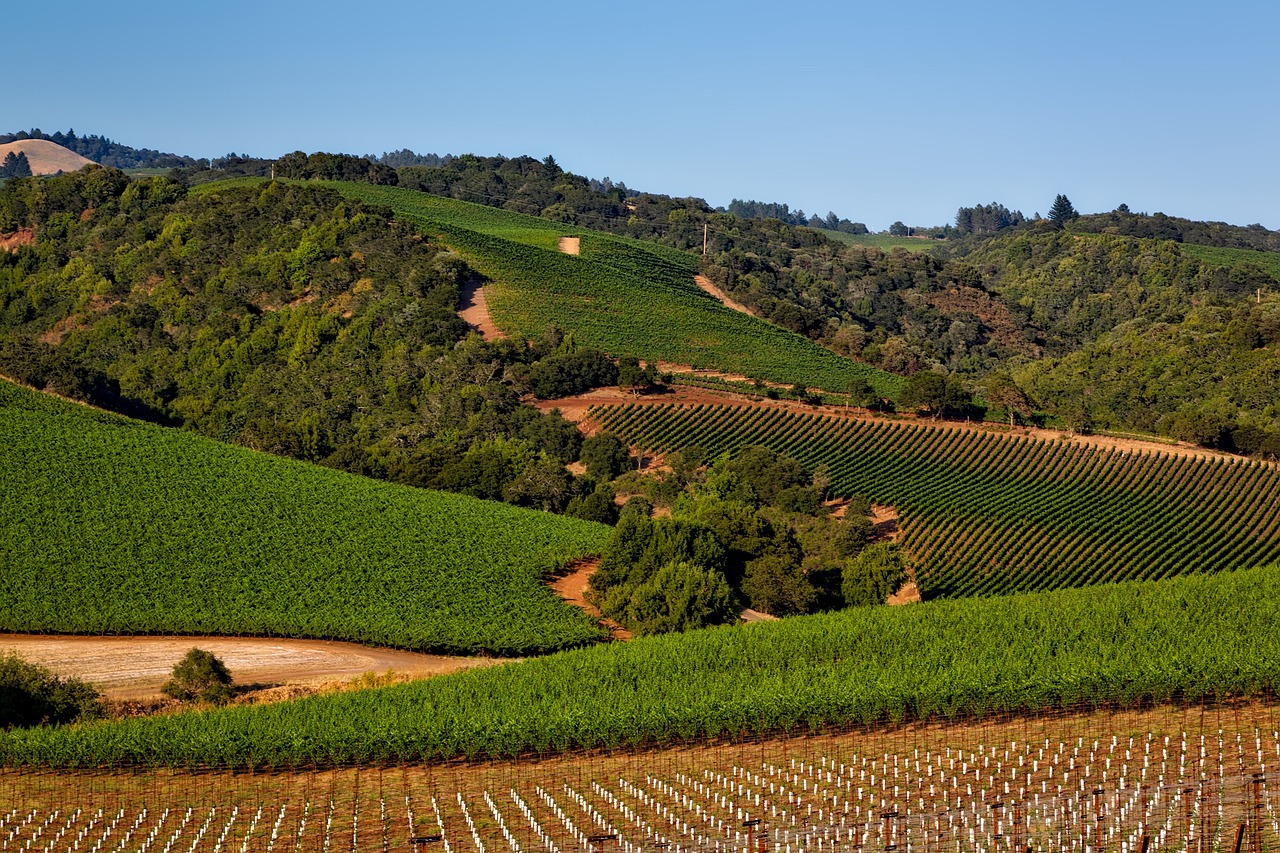
Napa Valley is one of the most defined and influential wine regions in Northern California, where viticulture is closely tied to geography and a clearly structured range of AVAs. Framed by the Mayacamas and Vaca mountain ranges, the valley’s orientation and climate create ideal conditions for growing grapes with both consistency and precision. From cooler southern zones shaped by bay influence to the warmer northern reaches, Napa’s landscape supports a focused and highly recognizable expression of wine. This clarity of structure forms the foundation of a wine culture that is both disciplined and widely influential.
Terroir & Varietals
Los Carneros · Coombsville
— cool climate — Chardonnay and Pinot Noir
Oak Knoll District · Yountville · Oakville · Rutherford
— moderate to warm — Cabernet Sauvignon, Merlot, Sauvignon Blanc
Atlas Peak · Mount Veeder · Spring Mountain District · Diamond Mountain District · Howell Mountain
— warm to hot — Cabernet Sauvignon, Zinfandel, Petite Sirah
Wild Horse Valley · Chiles Valley District
— cooler, higher elevation — Chardonnay, Pinot Noir, Cabernet Sauvignon
This guide includes Napa Valley for its defining role in shaping Northern California’s wine identity—structured, refined, and globally recognized. The valley’s geography creates a natural progression in style, from the cooler southern appellations of Carneros to the warmer, more concentrated expressions found further north. Cabernet Sauvignon anchors Napa’s reputation, supported by Merlot, Chardonnay, and a range of Bordeaux varietals that thrive across its AVAs. Unlike Sonoma’s broader variation, Napa is characterized by precision and consistency, where a strong sense of place is expressed through a more focused range of styles shaped by climate, elevation, and soil.