San Francisco is defined by its cultural diversity, density, and longstanding influence on the broader Northern California dining landscape. Within a compact geography, neighborhoods unfold with distinct identities, each contributing to a layered and evolving food culture. Here, global traditions intersect with regional ingredients, and chefs operate at the intersection of innovation and craft. The result is a culinary identity that is both deeply rooted and constantly in motion, where dining reflects the complexity and character of the city itself.
Read moreThe diversity of San Francisco’s neighborhoods creates a wide range in its cuisine. From historic enclaves to emerging districts, dining reflects a mix of cultural heritage, contemporary technique, and ingredient-driven cooking shaped by access to Northern California’s agricultural abundance. While not defined by a single landscape, the city remains closely connected to surrounding regions, drawing from nearby farms, fisheries, and producers. Restaurants across San Francisco reflect this spectrum. Some are grounded in long-standing institutions, others shaped by innovation and new perspectives, yet the most compelling share a commitment to quality, sourcing, and expression. In San Francisco, dining is both everyday and exceptional—where global influence and local identity converge.

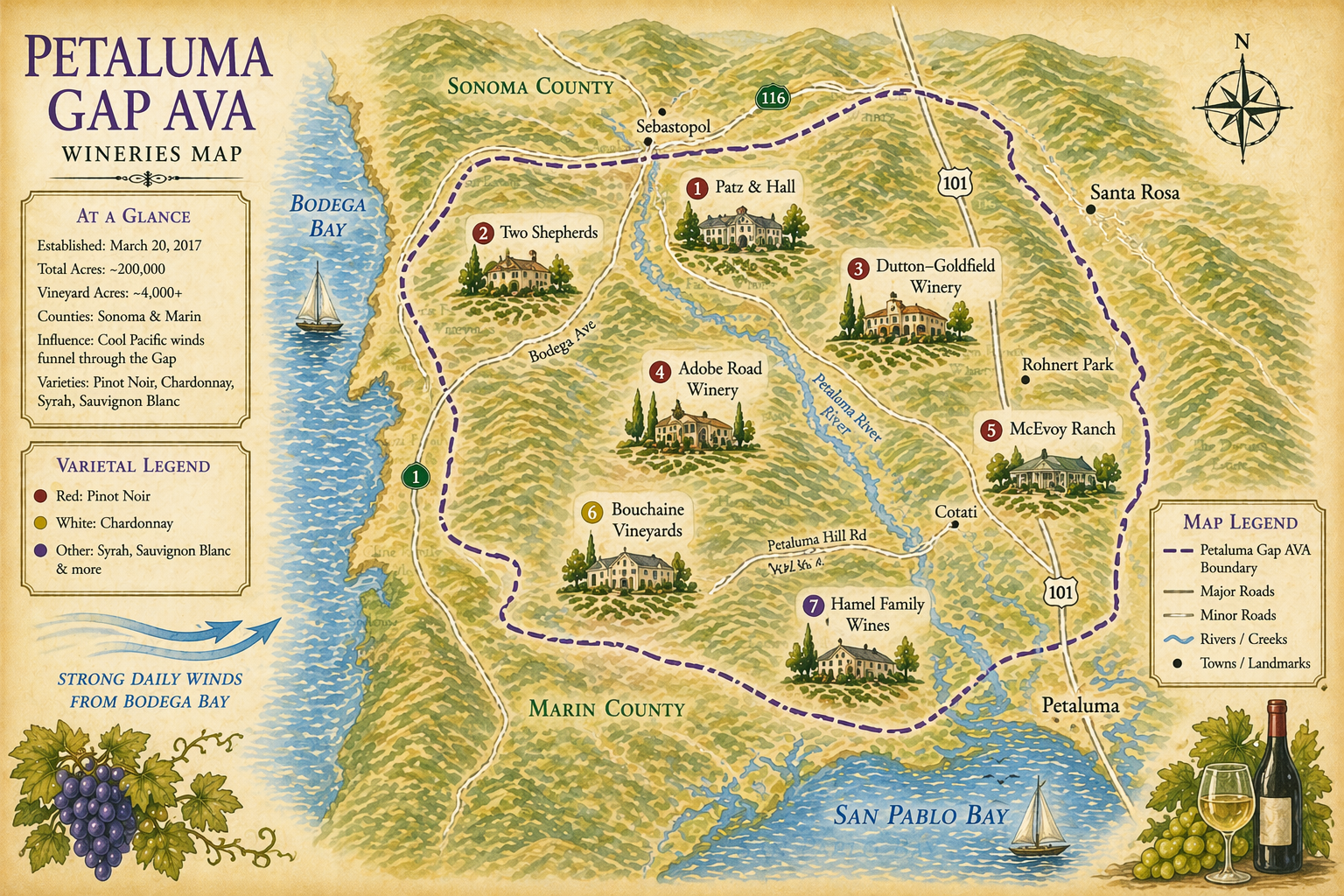
Established 2017 · Thermal wind corridor · Breach in Coast Range between Bodega Bay and San Pablo Bay · Wind-defined appellation · Silty clay loam and volcanic soils · Pinot Noir · Syrah · Petaluma and Sonoma County
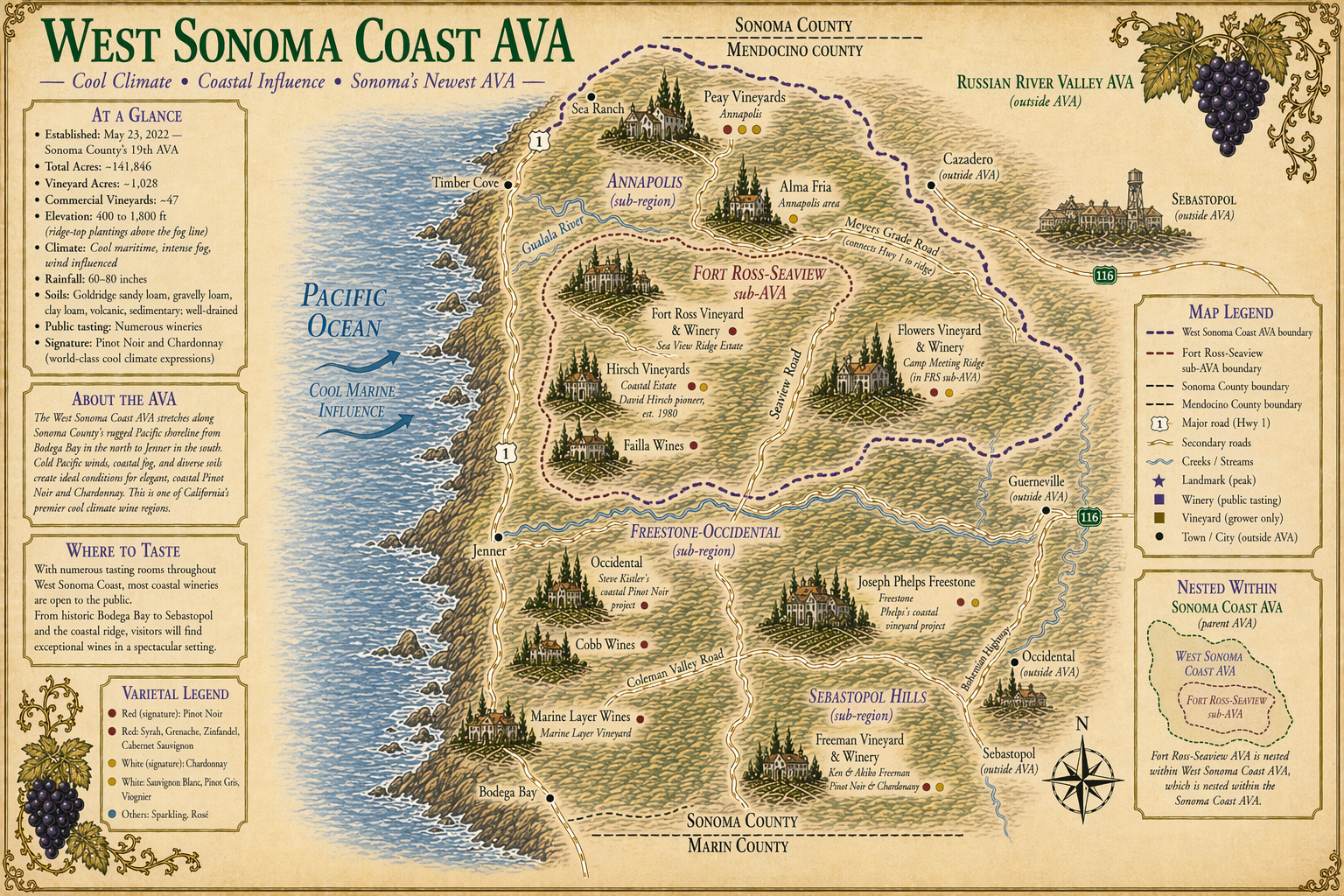
Established 2023 · Narrowly defined coastal AVA · Only vineyards genuinely shaped by Pacific Ocean proximity qualify · Rocky ancient soils · Temperatures rarely exceed 70°F · Pinot Noir · Chardonnay · Occidental, Freestone, Bodega Bay area
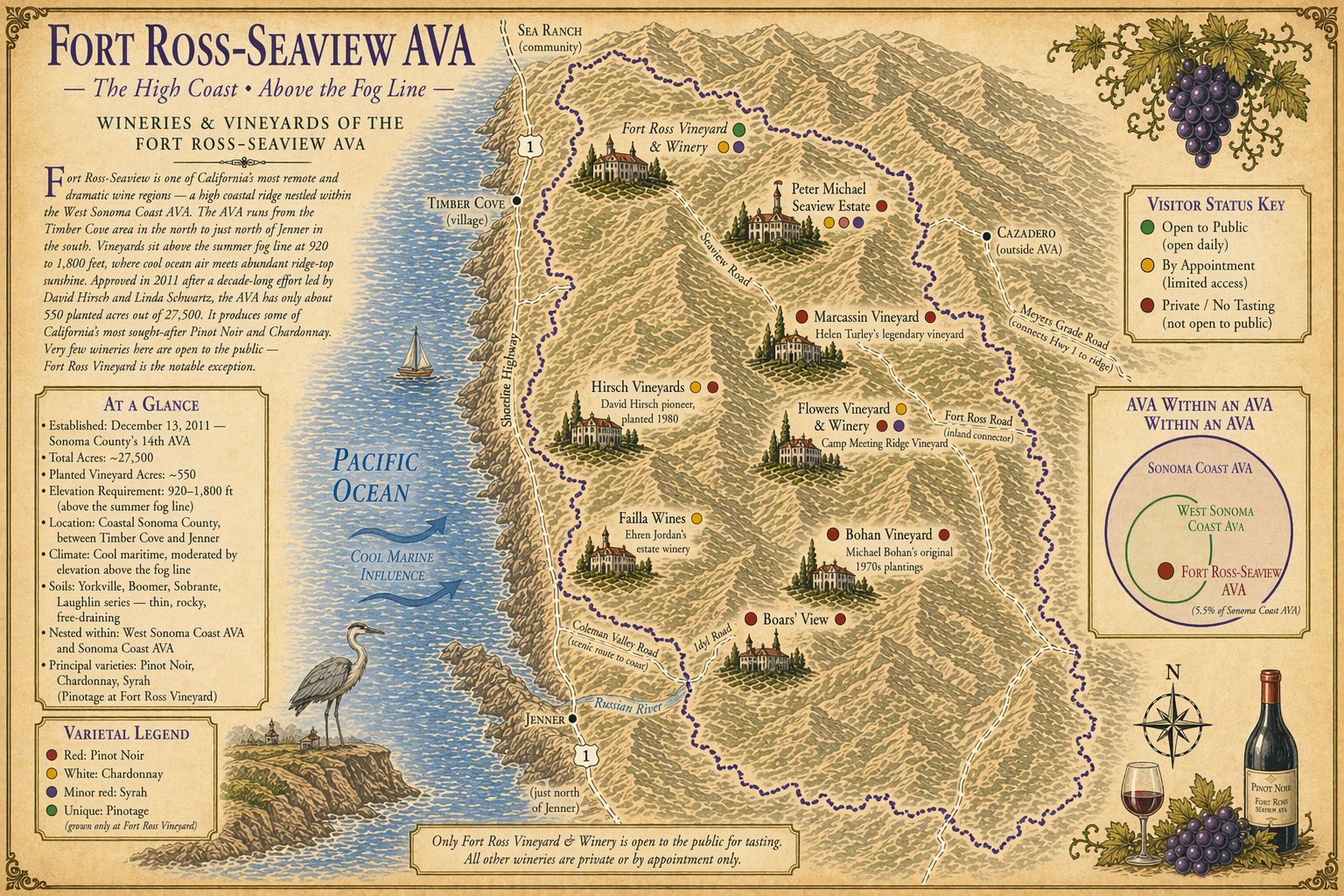
Established 2012 · Coastal ridges 1,200–2,200 ft elevation · Above the fog line · Dramatic 50°F+ diurnal range · Thin rocky ancient soils · Pinot Noir · Chardonnay · Jenner and Cazadero area, Sonoma County
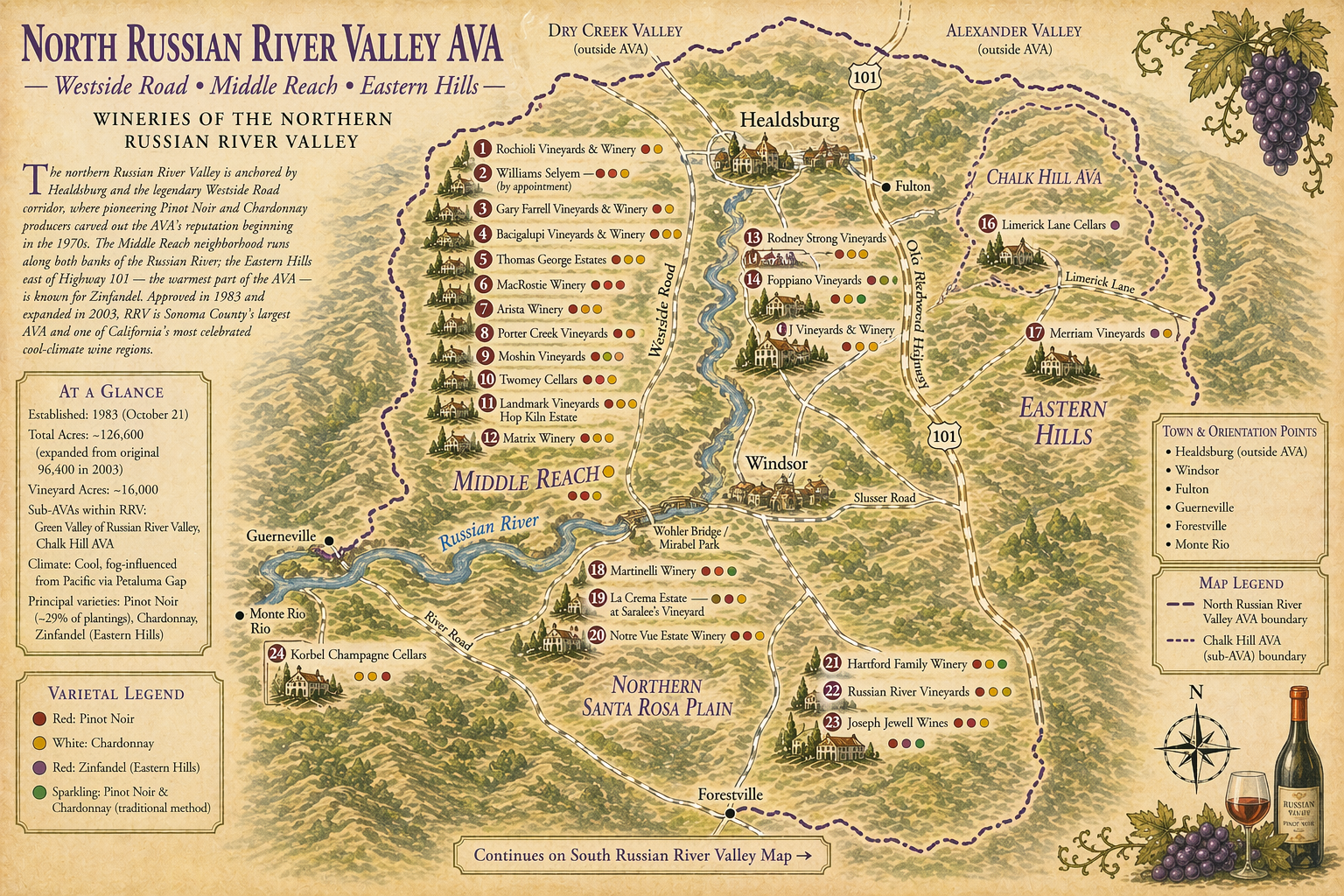
Established 1983 · Sonoma County · Healdsburg to Forestville · Westside Road · Middle Reach · Eastern Hills · Goldridge sandy loam, alluvial gravels, volcanic soils · Pinot Noir · Chardonnay · Zinfandel (Eastern Hills)
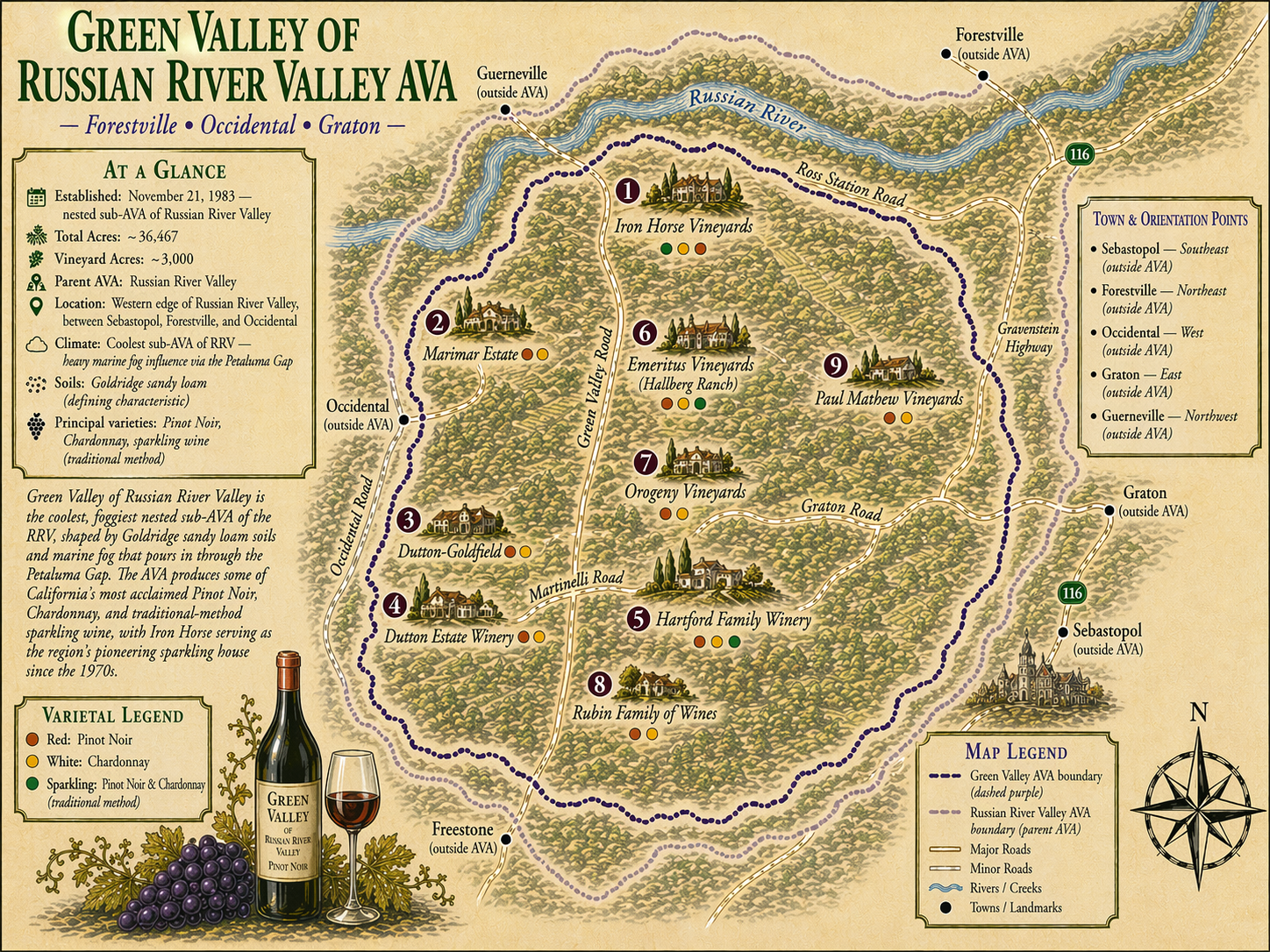
Established 1983 · Sub-AVA of Russian River Valley · Forestville and Graton area · Coldest and foggiest corner of RRV · Goldridge sandy loam soils · Shortest growing season in Sonoma · Pinot Noir · Chardonnay · Sparkling wine

Established 1983 · Sonoma County · Green Valley sub-AVA · Laguna Ridge · Sebastopol Hills · Santa Rosa Plain · Goldridge sandy loam · Coolest, foggiest corner of RRV · Pinot Noir · Chardonnay · Sparkling
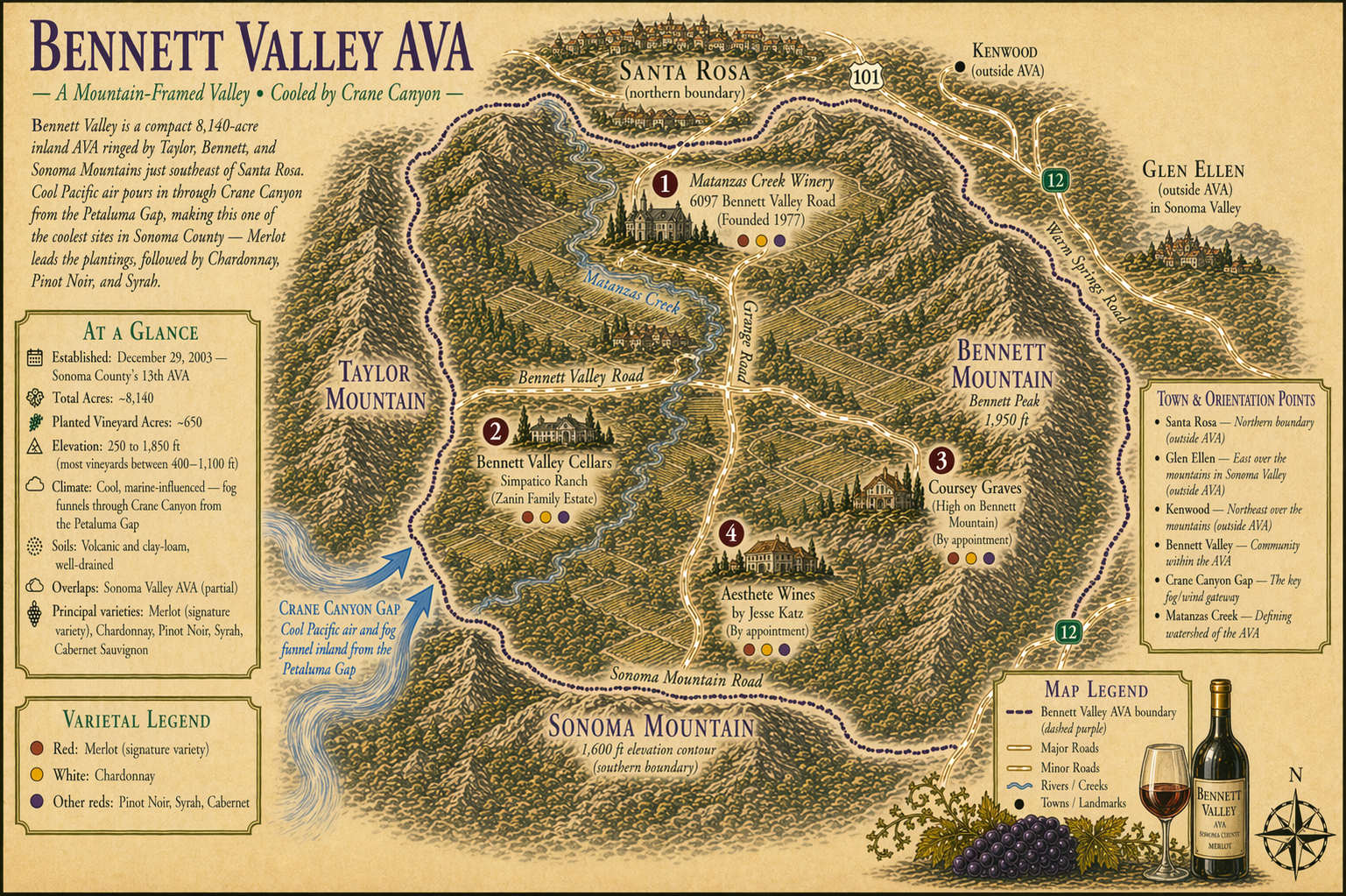
Established 1983 · Enclosed valley between three ridgelines · Volcanic soils · Petaluma Wind Gap influence · Merlot · Syrah · Chardonnay · Santa Rosa, Sonoma County
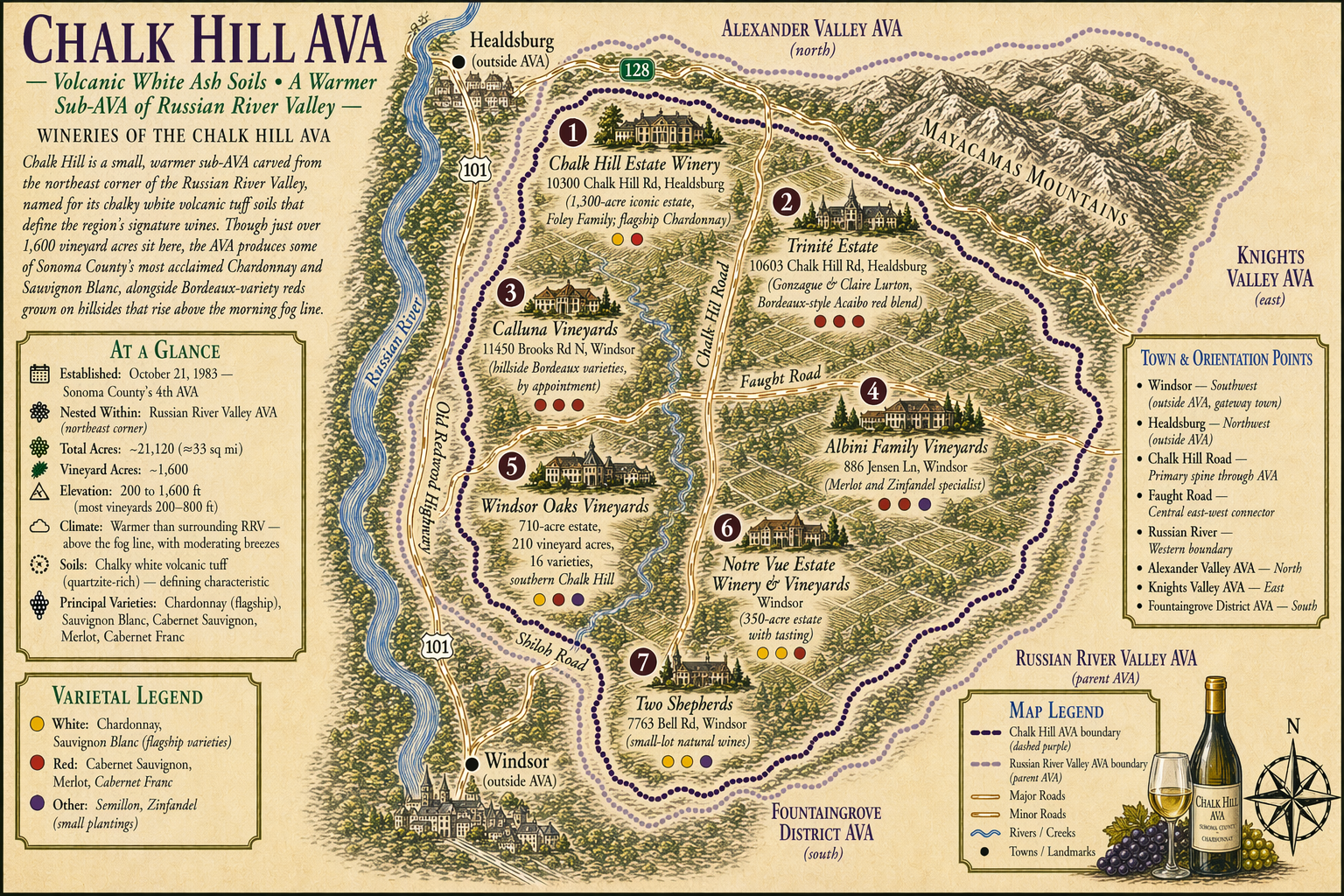
Established 1983 · Northeastern edge of Russian River Valley · White volcanic ash soils · Warmer and more sheltered than RRV proper · Chardonnay · Sauvignon Blanc · Cabernet Sauvignon · Windsor area, Sonoma County
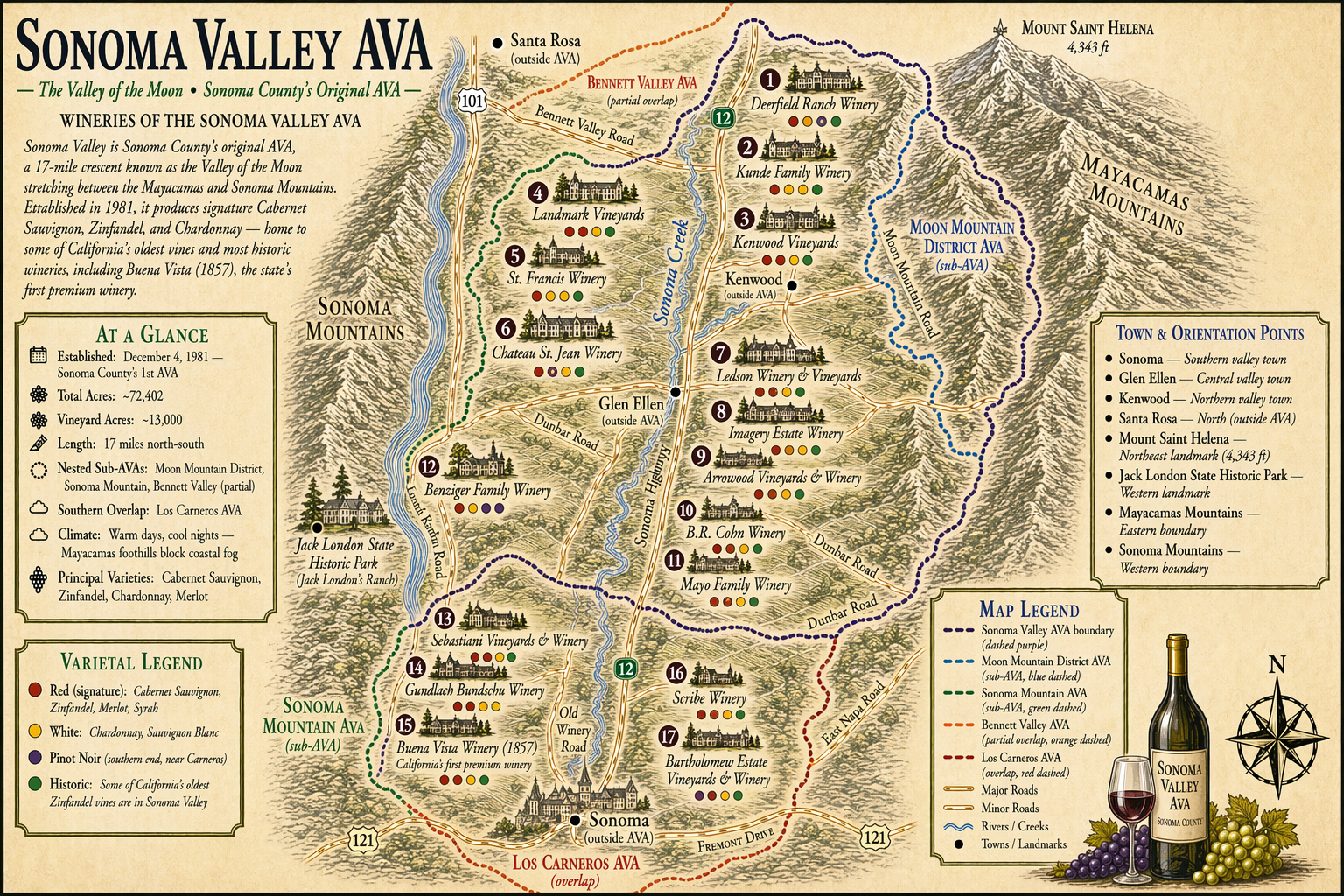
Established 1981 · Sonoma County's first AVA · Runs northwest-southeast from San Pablo Bay to Kenwood · Diverse elevations 0–2,000+ ft · Volcanic and alluvial soils · Cabernet Sauvignon · Zinfandel · Chardonnay · Pinot Noir

Established 2013 · Western slopes of Mayacamas Range · Elevations 400–2,000+ ft · Above the Sonoma Valley fog line · Ancient volcanic soils · Dramatic diurnal range · Cabernet Sauvignon · Zinfandel · Sonoma Valley, Sonoma County
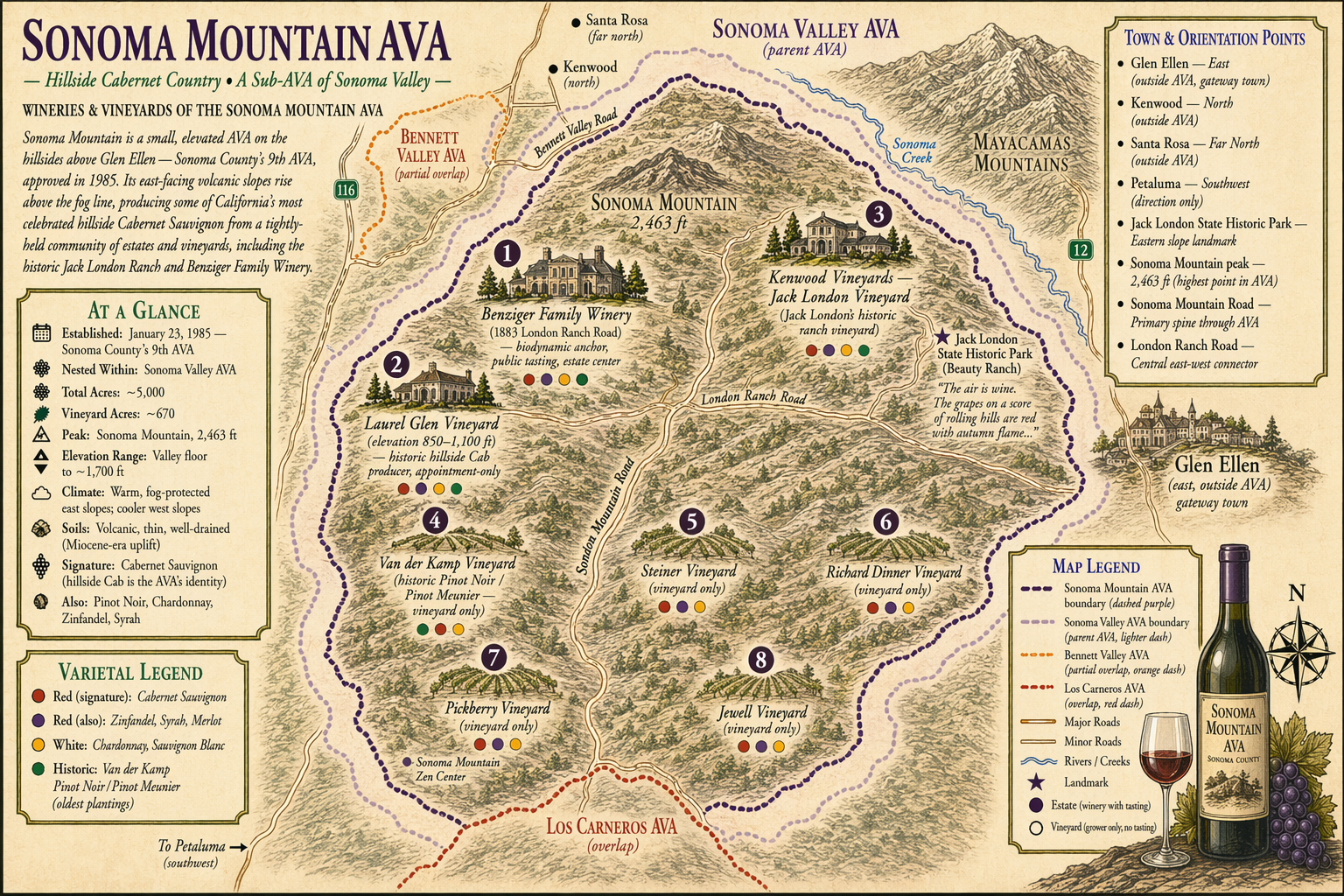
Established 1985 · Western edge of Sonoma Valley · Above the marine fog line · Ancient volcanic soils · Warm days, cool nights · Cabernet Sauvignon · Zinfandel · Merlot · Glen Ellen and Kenwood area, Sonoma County
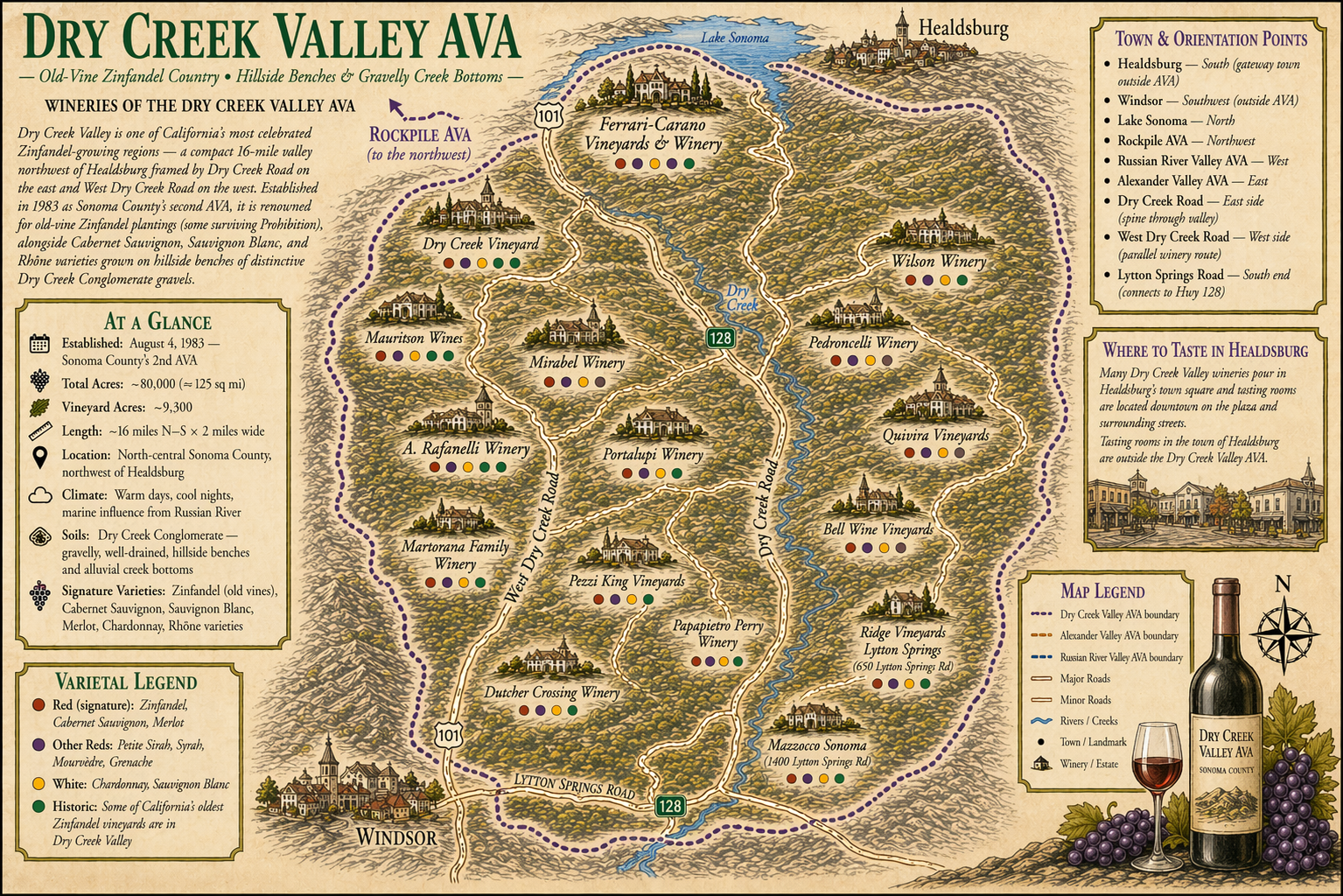
Established 1983 · 16 miles long, 1 mile wide · Benchland alluvial soils · Zinfandel and Sauvignon Blanc dominant · Old-vine heritage · Northwest of Healdsburg
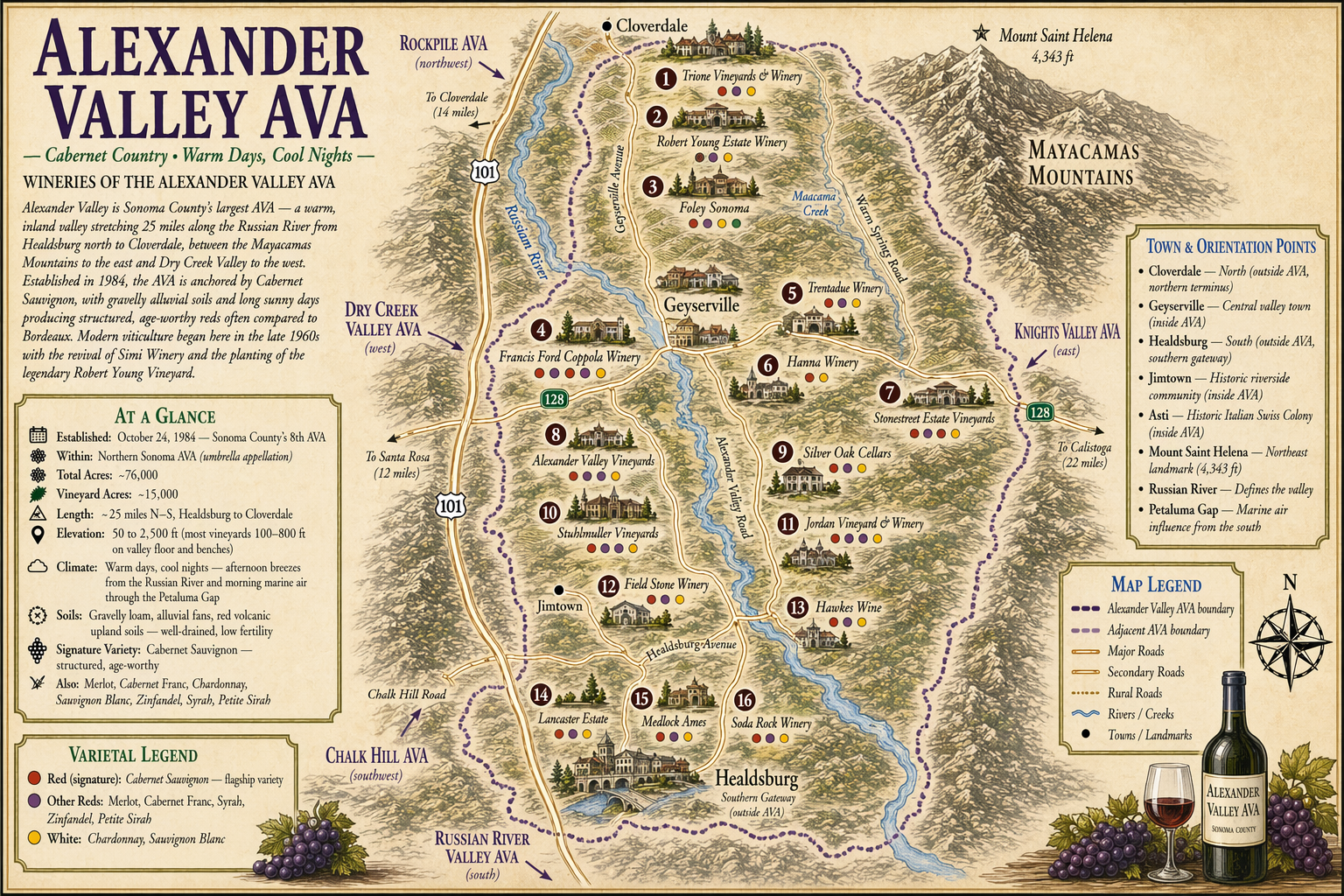
Established 1984 · 22-mile valley · Russian River corridor · Warm to hot climate · Cabernet Sauvignon and Merlot dominant · Old-vine Zinfandel heritage · Healdsburg to Cloverdale
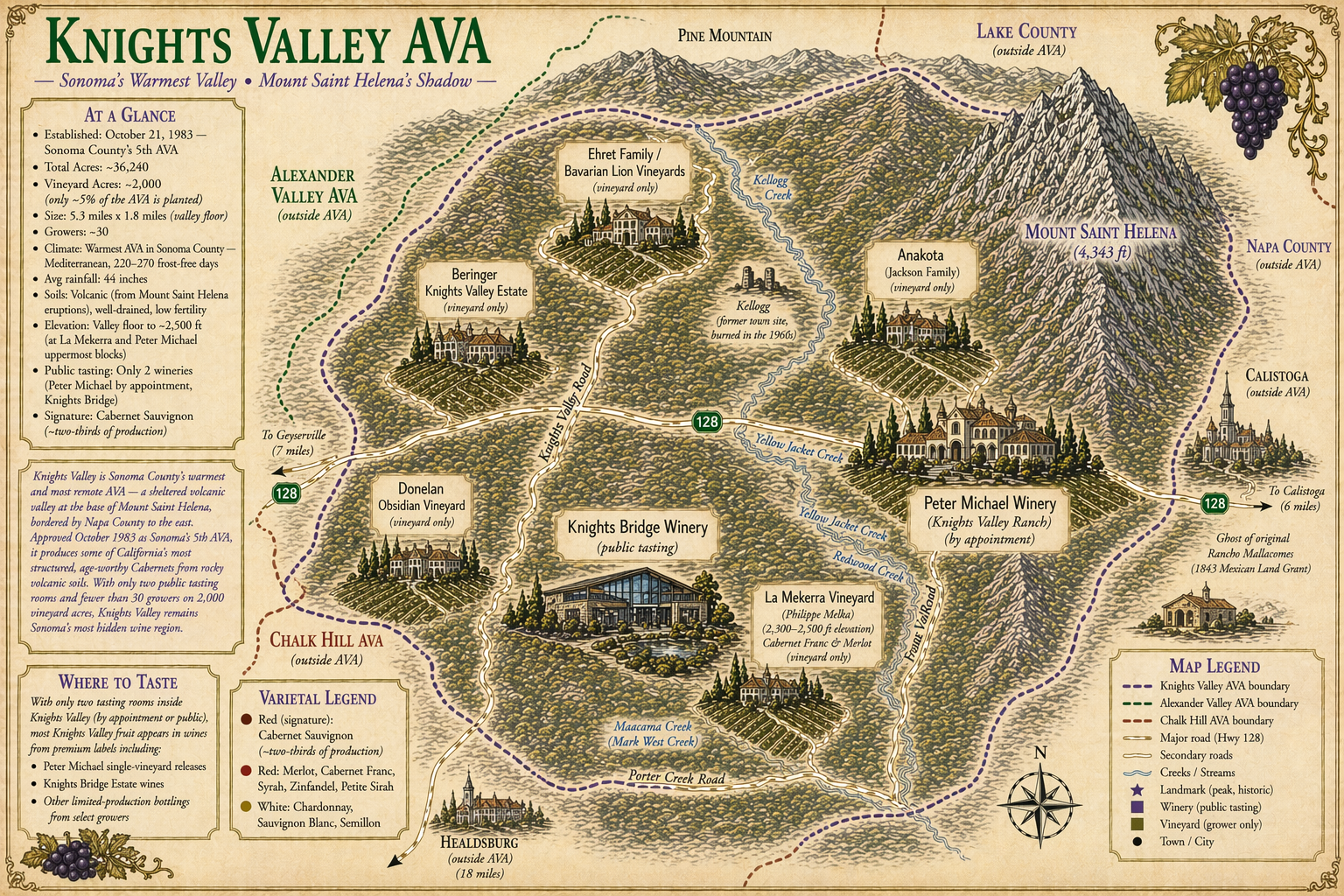
Established 1983 · Sonoma County · Warmest AVA in Sonoma · Volcanic and alluvial soils · Cabernet Sauvignon dominant · Borders Napa Valley to the east
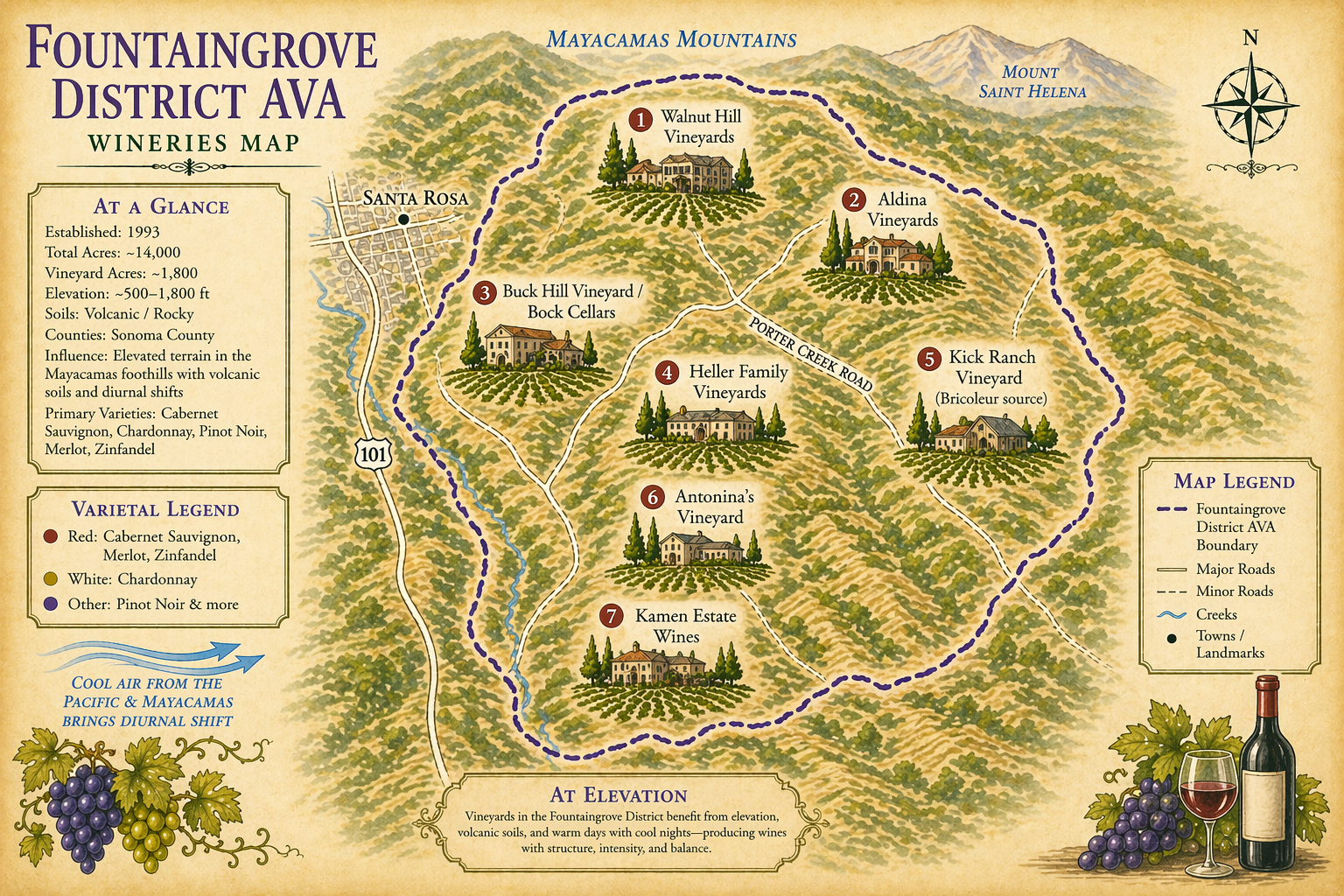
Established 2015 · Volcanic hillsides above Santa Rosa · Elevations 400–2,000 ft · Above the marine fog line · Thin rocky volcanic soils · Named for 19th-century utopian community · Rebuilt after 2017 Tubbs Fire · Cabernet Sauvignon · Merlot · Cabernet Franc

Established 2002 · Nation's 145th AVA · Sonoma's 12th · ~160 acres planted across 11 vineyards · Elevation 800–2,100 ft · Zinfandel dominant · Above Lake Sonoma · Northwest corner of Dry Creek Valley
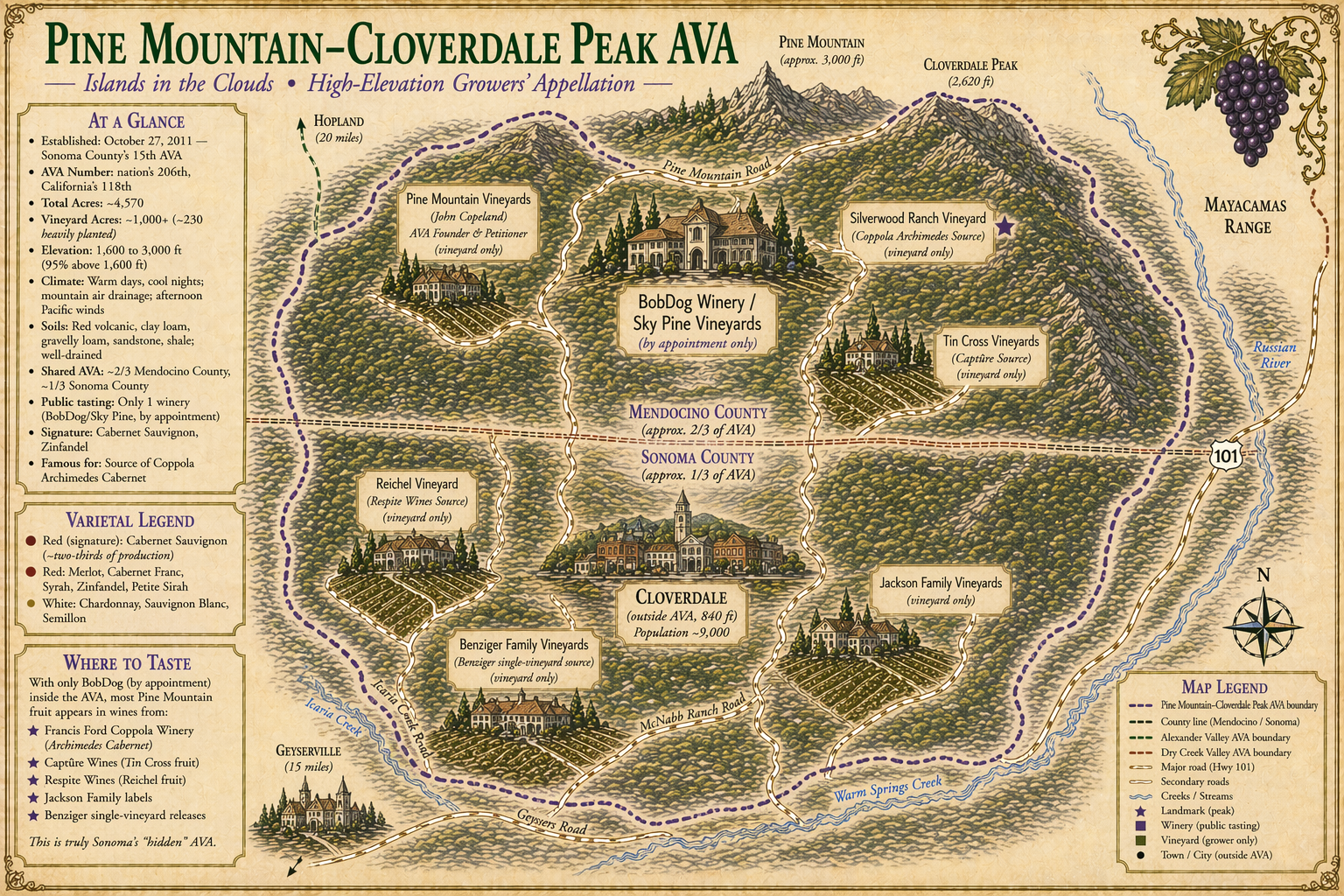
Established 2012 · Sonoma-Mendocino border · Elevations 1,600–2,700 ft · Volcanic soils · Cabernet Sauvignon and Bordeaux blends dominant · Extreme diurnal range

Large umbrella AVA · Pacific Ocean-defined · Sub-regions: Fort Ross-Seaview, West Sonoma Coast, Petaluma Gap, Green Valley · Pinot Noir and Chardonnay dominant · Coolest growing conditions in Sonoma