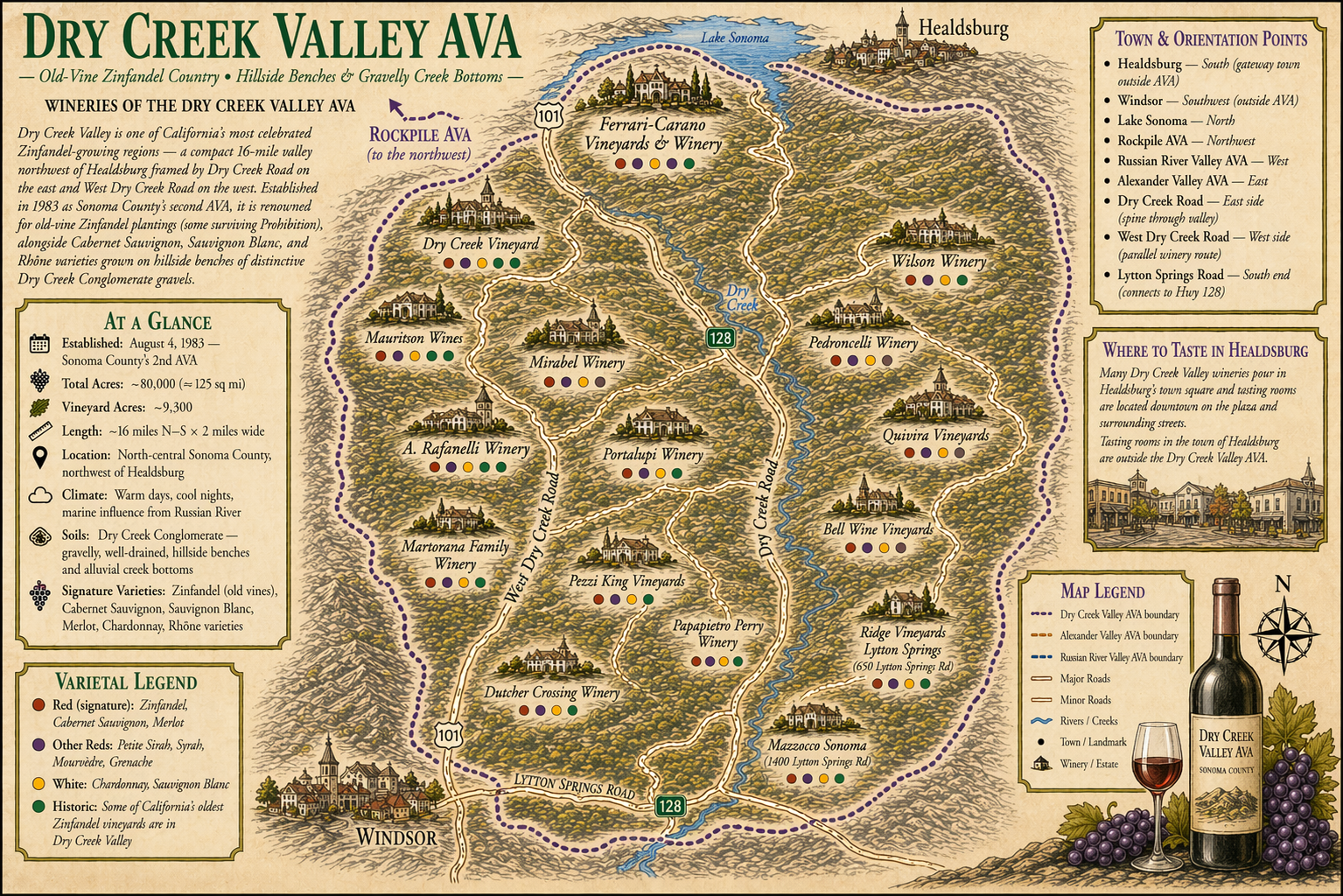
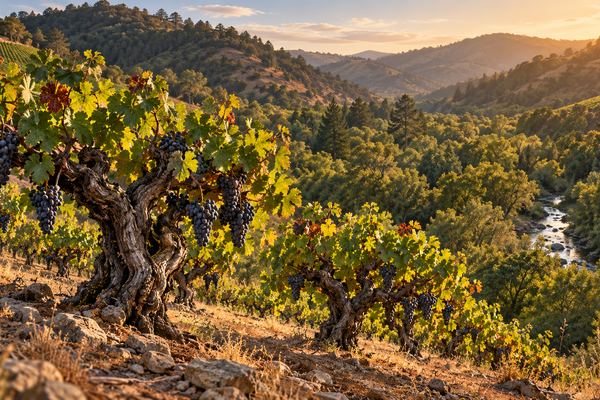
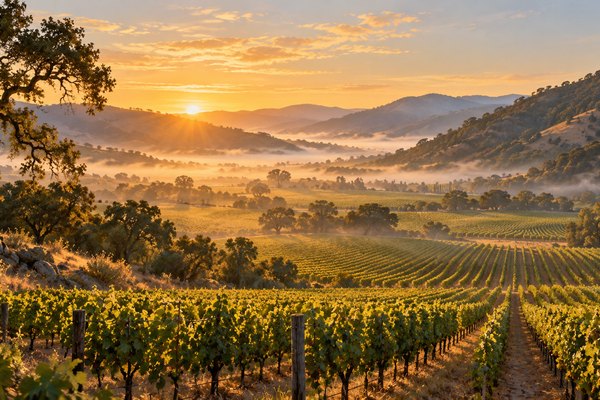
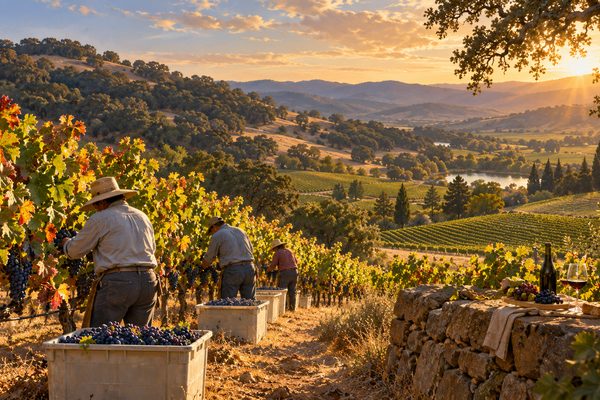
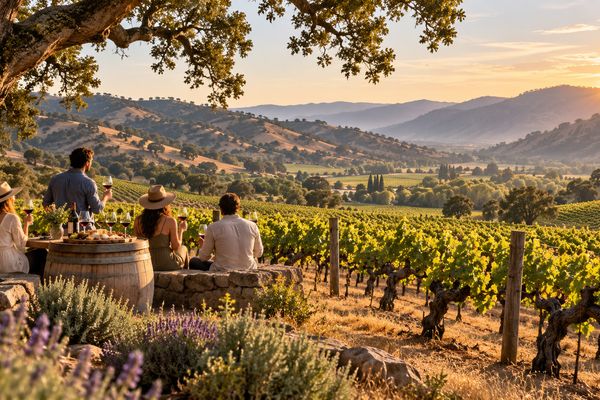
Dry Creek Valley is one of Sonoma's most clearly defined appellations: a narrow, 16-mile-long valley running northwest from Healdsburg that has become the definitive California address for old-vine Zinfandel and food-friendly Sauvignon Blanc. The valley's benchland soils, well-drained alluvial gravel and loam, give Zinfandel a structure and spice that distinguishes Dry Creek from its warmer inland neighbors, and the proximity of Lake Sonoma and Pacific marine influence drawn inland up the Russian River corridor keep summer temperatures from the kind of excess that produces soft, overripe fruit.
Dry Creek received its AVA designation in 1983, one of the earliest in Sonoma County, and producers like Ridge Vineyards (Lytton Springs), A. Rafanelli, and Dry Creek Vineyard have spent four decades establishing what the appellation can produce at its best. The valley has also become a haven for Rhône and Italian varietals, with estates like Quivira, Preston Farm, and Unti demonstrating that Dry Creek's climate and soils are more versatile than the Zinfandel designation suggests.
Tasting fees are per person: $ under $25 · $$ $25–50 · $$$ $50–100 · $$$$ $100+. Reserve and seated experiences may run higher.













A contemporary Sonoma label built around Bennett Valley Syrah and Pinot Noir from Dry Stack Vineyard, owned by Sonoma County native Jeff Jones and crafted by Jesse Katz of Aperture Cellars. Bennett Valley's cool season yields a Syrah closer to Crozes-Hermitage than California, poured from a creekside Healdsburg farm.




A Siena-inspired Villa Fiore in the heart of Dry Creek, founded by the Carano family in 1981 and now a Foley Family property. Five acres of Italian gardens, an Enoteca in the underground cellar, and 5,000 tulips blooming late February through March. Twenty-plus wines from six appellations. Kid-friendly tastings, walk-ins welcome.


Erik Miller named his winery for his Indiana hometown, founding it in 2004 with 500 cases of Cabernet. In partnership with fourth-generation Dry Creek farmer Randy Peters, Kokomo produces 20+ varietals from the east bench of Dry Creek Valley, plus a natural-wine sublabel, Breaking Bread. Hoosier hospitality, single-vineyard rigor.

Six generations of Mauritsons have farmed Sonoma's Dry Creek and Rockpile hillsides since 1868: the family's 4,000-acre Rockpile homestead reshaped by Prohibition and Lake Sonoma. Clay Mauritson, an Oregon Ducks linebacker before founding the label in 1998, produces single-vineyard wines across Dry Creek, Alexander Valley, and Rockpile.
View Editorial
Founded in 1984 by Doug and Lee Nalle and now run by their son Andrew. Open Saturdays and by appointment, with patio tastings behind the cellar and a wine cave under a living rosemary roof. The focus is restrained, European-style Zinfandel, moderate in alcohol, bright, built to age.

View Editorial

View Editorial
Founded in 1997 by George Unti and his son Mick, Unti is one of California's leading specialists in Mediterranean varieties: 60 organically farmed acres of Barbera, Sangiovese, Montepulciano, Ciliegiolo, Grenache, Syrah, Vermentino, and Grenache Blanc. Long maceration, basket press, aging in stainless steel, concrete, and French oak. The tasting room caps at six guests per appointment.

Ken and Diane Wilson built Wilson Winery from a century-old tin barn on Dry Creek Road in 1993. Diane is the winemaker; the family has expanded across Sonoma properties, but the original Dry Creek estate, with its balcony deck, remains the anchor. Award-winning Zinfandel headlines, with Cabernet and Petite Sirah.
View Editorial
The quiet legend of Dry Creek Valley, a family operation farming the same estate since the 1950s. Fourth-generation winemaker Shelly Rafanelli makes Zinfandel, Cabernet Sauvignon and Merlot sold directly by the winery, by appointment and through its A. List, with no wide distribution. Honest, structured expressions of Dry Creek terroir draw a fiercely loyal following.
View Editorial
One of Dry Creek Valley's most dramatically sited wineries: a cave carved into the benchland hillside, with estate vineyards including Big River Ranch and Lily Hill. The old-vine Zinfandel draws from the appellation's oldest blocks, yielding wines of depth. The by-appointment cave tasting room is a memorable setting.
One of Dry Creek Valley's oldest operating wineries, established in 1975 and quietly elegant ever since. Patti and Ray Chambers acquired it in 1993 and pared production to small lots, building a name for handcrafted, age-worthy wines from sustainable farming. Redwood barrel room and garden patio among redwoods.


Lou and Susan Preston farm certified organic and biodynamic land on West Dry Creek Road, not just a winery. The tasting room shares space with a farm store selling sourdough, estate olive oil, pickles, produce, and grass-fed lamb. Mediterranean-style Zinfandel, Syrah, Grenache, Carignane, Vermentino, and Roussanne. Friendly cats wander.
Founded in 1981 and owned by Pete and Terri Kight, Quivira takes its name from a mythical realm on early Spanish maps. Certified organic vineyards, farmed with biodynamic practices, produce Zinfandel, Sauvignon Blanc, and Rhône varietals. Visitors wander the kitchen gardens, meet the chickens, and spot Mount St. Helena. Family- and dog-friendly.
Giovanni and Julia Pedroncelli bought this Geyserville property in 1927, with 25 acres of Zinfandel and a former winery that had spent Prohibition as a barn. Four generations later, the family sustainably farms about 100 acres. The tasting room stays unpretentious: seated flights indoors or on the outdoor patio, and a bocce court.
Founded in 1972 by David Stare, a Loire-inspired Bostonian who drove his family west, the first post-Prohibition bonded winery in Dry Creek Valley, the first to plant Sauvignon Blanc here, and the first to label an American wine 'Meritage.' Still family-owned. The Fumé Blanc is the benchmark; bocce and a garden patio.
Ridge first made Lytton Springs in 1972 and bought the vineyard in 1991; its century-old Zinfandel vines are the Dry Creek benchmark against which other Zinfandels are measured. Paul Draper's decades of stewardship set the template for serious California Zinfandel. The straw-bale, earthen-plaster winery looks out on the old vines from the tasting room.
Edoardo Seghesio, a Piedmont immigrant, planted his first Zinfandel in 1895 in what became the family's Home Ranch in Alexander Valley. Since 2011 the winery has belonged to Crimson Wine Group, with fifth-generation family member Ned Neumiller directing the vineyards. The shaded Grove lounge welcomes picnics, with bocce alongside.
In 1998 Helen Turley, then winemaker for Jayson Pahlmeyer, found a 30-acre site near her Marcassin vineyard on a remote Fort Ross-Seaview ridge and called it destined to become 'the La Tâche of California.' Pahlmeyer bought it; David Abreu designed the vineyard as 30 one-acre blocks, each a single clone.
Oops! Something went wrong while submitting the form