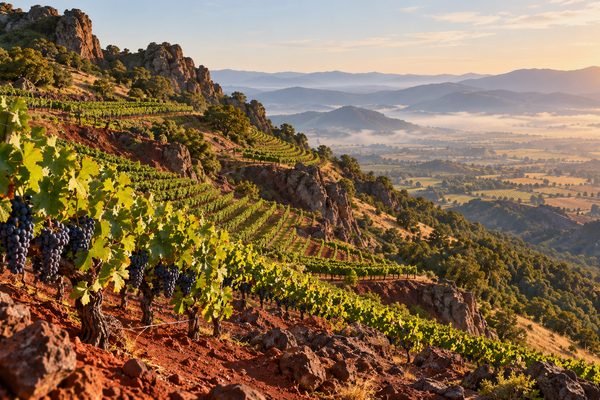
Founded in 1953 by Ambassador James D. Zellerbach to rival the Côte d'Or, pioneering stainless-steel fermentation and small French oak barrels in California. The Ambassador Vineyard holds America's oldest producing Chardonnay and Pinot Noir vines, on a 200-acre Moon Mountain estate with a tasting room on the mountain.


Hanzell is one of California's most important wineries, full stop. Founded in 1953 by diplomat James D. Zellerbach to produce Chardonnay and Pinot Noir to rival the great wines of Burgundy, Hanzell introduced stainless steel fermentation tanks and small French oak barrels to California winemaking — innovations that transformed the industry. The Ambassador Vineyard, planted in 1953, contains some of the oldest producing Chardonnay and Pinot Noir vines in North America. Under winemaker Michael McNeill, the wines remain among the most age-worthy and collectible in California — built for decades, not years.
Estate Chardonnay, Sonoma Valley — The flagship white, drawing on the historic Ambassador's 1953 Vineyard; mineral-driven, taut and built to age.
Estate Pinot Noir, Sonoma Valley — From the oldest continuously producing Pinot Noir vines in North America; structured, savory and long-lived.
Sebella Chardonnay, Sonoma Valley — A brighter, fresher Chardonnay from younger estate vines.
Sebella Pinot Noir, Sonoma Valley — A more approachable, fruit-forward estate Pinot Noir.
Founded in 1953 by Ambassador James D. Zellerbach (and named for his wife, Hana), Hanzell is California's Burgundian pioneer — the first in the state to use stainless-steel fermentation and French oak. Its Ambassador's 1953 Vineyard holds the oldest continuously producing Chardonnay and Pinot Noir vines in North America; the certified-organic Moon Mountain estate has been in the de Brye family since 1975.
Hanzell is the rare Moon Mountain producer whose tasting room actually sits on the mountain itself — a 200-acre estate at the southern toe of the Mayacamas overlooking Sonoma Valley and San Pablo Bay. Founded in 1953 by Ambassador James D. Zellerbach after extensive time in Burgundy, Hanzell planted Chardonnay and Pinot Noir when fewer than a few hundred acres existed in North America, and pioneered the use of stainless steel fermentation tanks and French oak barrels in California. The original Ambassador's Vineyard still produces — the oldest continuously-producing Chardonnay and Pinot Noir vines in America. Winemaker Jason Jardine (previously at Flowers and Rhys) has led the certified-organic farming program since 2014. Heritage Tour + Tasting $90 (90 minutes); Library Tour adds two library wines for $150 (2.5 hours). All experiences by appointment only, Monday–Friday, adults only.

Jason Jardine has been president and director of winemaking at Hanzell Vineyards since 2014, stewarding one of California's most historic estates. Founded in 1953 by Ambassador James D. Zellerbach on the Mayacamas slopes above Sonoma — and named for his wife Hana — Hanzell pioneered Burgundian Pinot Noir and Chardonnay in America and was the first winery in the world to use stainless steel fermentation and exclusively French oak barrels. Owned by the de Brye family since 1975 and farmed today as a holistic, regenerative bio-farm with livestock among the vines, Hanzell produces age-worthy, mineral-driven Chardonnay and Pinot Noir under Jardine, who came from Flowers and Rhys with a deep commitment to ecological farming.

James D. Zellerbach founded Hanzell Vineyards in 1953, naming the Sonoma estate by joining his own surname with that of his wife, Hana. A San Francisco paper-industry magnate and U.S. Ambassador to Italy, Zellerbach was so taken with the great wines of Burgundy that he set out to make Pinot Noir and Chardonnay of comparable refinement above Sonoma. His pioneering winery introduced temperature-controlled stainless-steel fermentation and French-oak aging to California, innovations that reshaped American winemaking. Zellerbach died in 1963; the de Brye family has owned and nurtured Hanzell since 1975, preserving some of the oldest producing Pinot and Chardonnay vines in the New World.
Update your editorial to go live.
UpdateReview your current editorial on the left. Submit changes in the matching fields on the right — leave any field blank if no change is needed.
1. Update one section at a time using its SEND button.
2. Each SEND creates a provisional draft — your live page is not updated yet.
3. Complete the final submission at the bottom to approve and publish.
Your editorial page and submission form are always accessible through this page — and only to you. Update anytime.
Estate Chardonnay, Sonoma Valley — The flagship white, drawing on the historic Ambassador's 1953 Vineyard; mineral-driven, taut and built to age.
Estate Pinot Noir, Sonoma Valley — From the oldest continuously producing Pinot Noir vines in North America; structured, savory and long-lived.
Sebella Chardonnay, Sonoma Valley — A brighter, fresher Chardonnay from younger estate vines.
Sebella Pinot Noir, Sonoma Valley — A more approachable, fruit-forward estate Pinot Noir.
Founded in 1953 by Ambassador James D. Zellerbach (and named for his wife, Hana), Hanzell is California's Burgundian pioneer — the first in the state to use stainless-steel fermentation and French oak. Its Ambassador's 1953 Vineyard holds the oldest continuously producing Chardonnay and Pinot Noir vines in North America; the certified-organic Moon Mountain estate has been in the de Brye family since 1975.
Hanzell is one of California's most important wineries, full stop. Founded in 1953 by diplomat James D. Zellerbach to produce Chardonnay and Pinot Noir to rival the great wines of Burgundy, Hanzell introduced stainless steel fermentation tanks and small French oak barrels to California winemaking — innovations that transformed the industry. The Ambassador Vineyard, planted in 1953, contains some of the oldest producing Chardonnay and Pinot Noir vines in North America. Under winemaker Michael McNeill, the wines remain among the most age-worthy and collectible in California — built for decades, not years.
Hanzell is the rare Moon Mountain producer whose tasting room actually sits on the mountain itself — a 200-acre estate at the southern toe of the Mayacamas overlooking Sonoma Valley and San Pablo Bay. Founded in 1953 by Ambassador James D. Zellerbach after extensive time in Burgundy, Hanzell planted Chardonnay and Pinot Noir when fewer than a few hundred acres existed in North America, and pioneered the use of stainless steel fermentation tanks and French oak barrels in California. The original Ambassador's Vineyard still produces — the oldest continuously-producing Chardonnay and Pinot Noir vines in America. Winemaker Jason Jardine (previously at Flowers and Rhys) has led the certified-organic farming program since 2014. Heritage Tour + Tasting $90 (90 minutes); Library Tour adds two library wines for $150 (2.5 hours). All experiences by appointment only, Monday–Friday, adults only.
Jason Jardine has been president and director of winemaking at Hanzell Vineyards since 2014, stewarding one of California's most historic estates. Founded in 1953 by Ambassador James D. Zellerbach on the Mayacamas slopes above Sonoma — and named for his wife Hana — Hanzell pioneered Burgundian Pinot Noir and Chardonnay in America and was the first winery in the world to use stainless steel fermentation and exclusively French oak barrels. Owned by the de Brye family since 1975 and farmed today as a holistic, regenerative bio-farm with livestock among the vines, Hanzell produces age-worthy, mineral-driven Chardonnay and Pinot Noir under Jardine, who came from Flowers and Rhys with a deep commitment to ecological farming.
James D. Zellerbach founded Hanzell Vineyards in 1953, naming the Sonoma estate by joining his own surname with that of his wife, Hana. A San Francisco paper-industry magnate and U.S. Ambassador to Italy, Zellerbach was so taken with the great wines of Burgundy that he set out to make Pinot Noir and Chardonnay of comparable refinement above Sonoma. His pioneering winery introduced temperature-controlled stainless-steel fermentation and French-oak aging to California, innovations that reshaped American winemaking. Zellerbach died in 1963; the de Brye family has owned and nurtured Hanzell since 1975, preserving some of the oldest producing Pinot and Chardonnay vines in the New World.
Please submit your images separately — they're handled by a different department and will be processed alongside your editorial update.