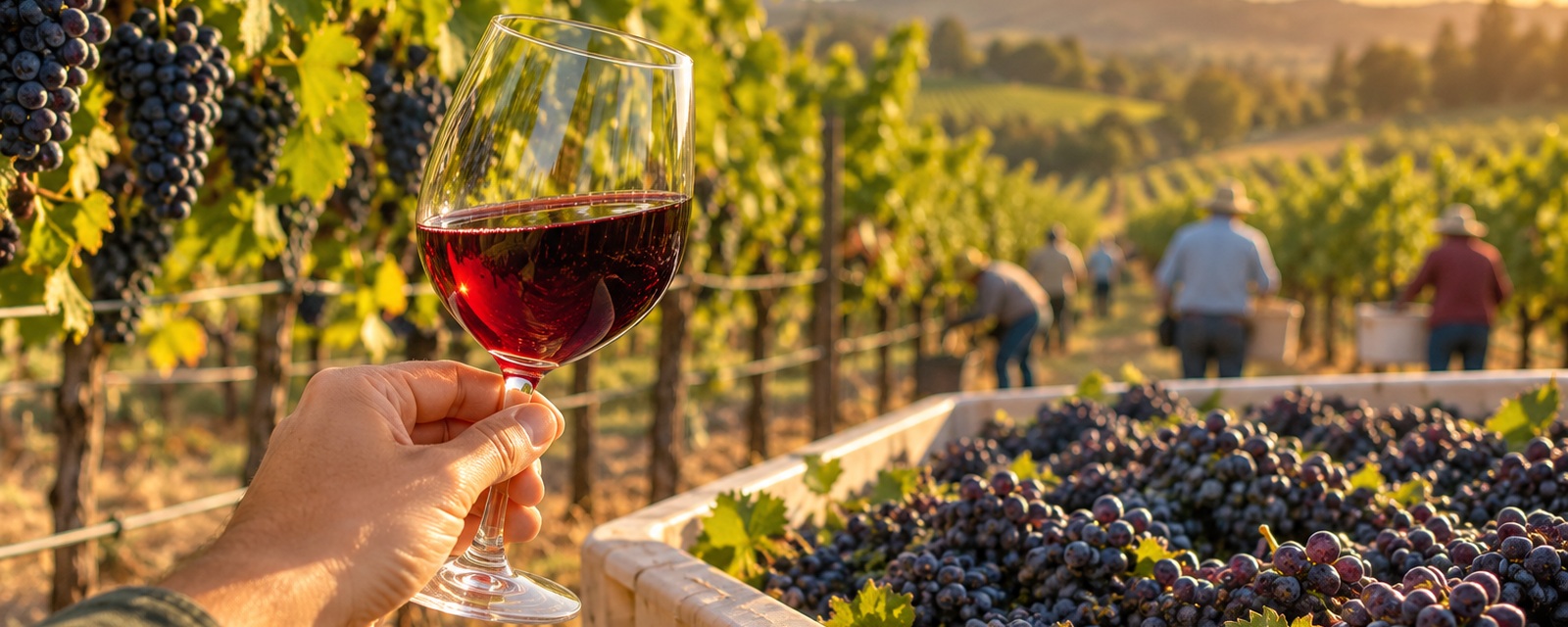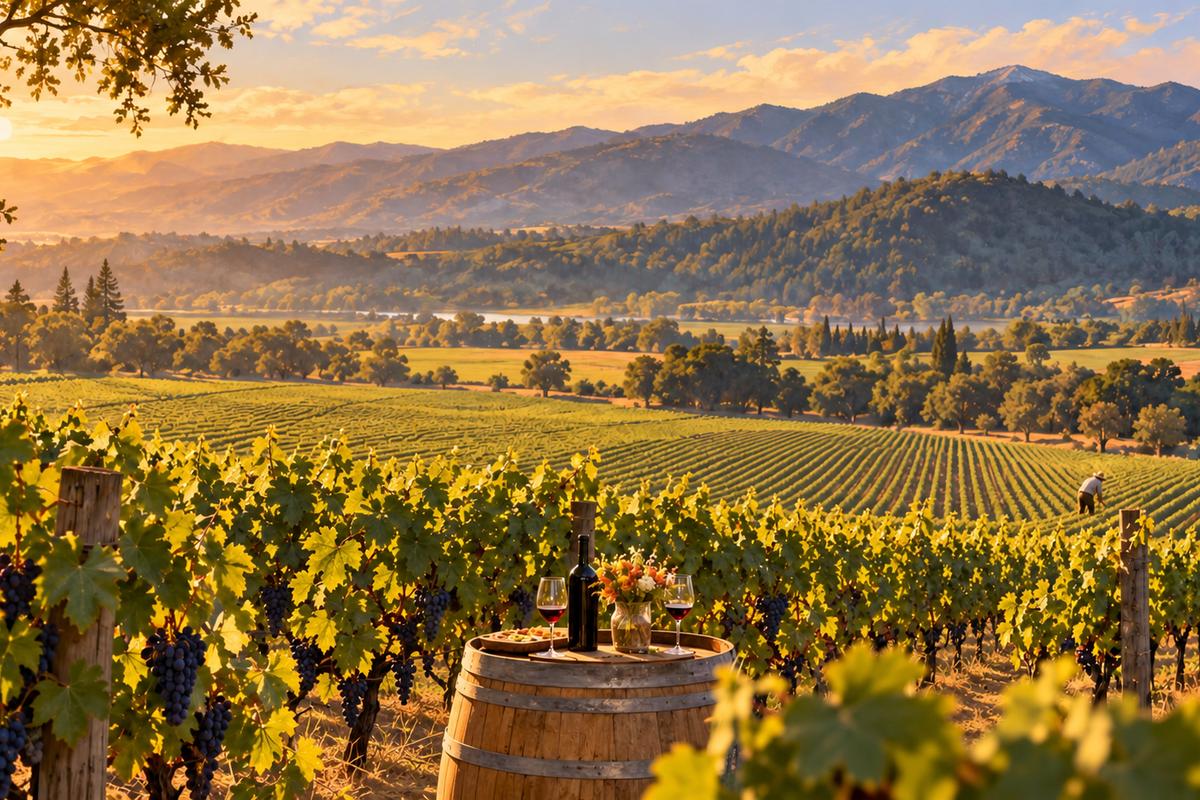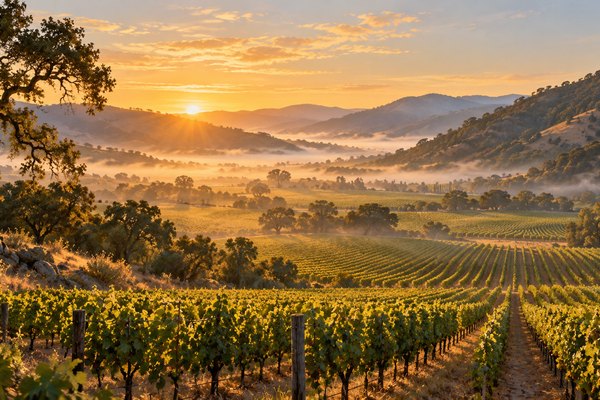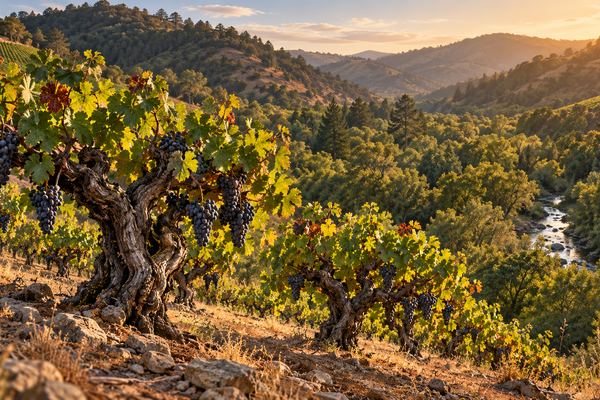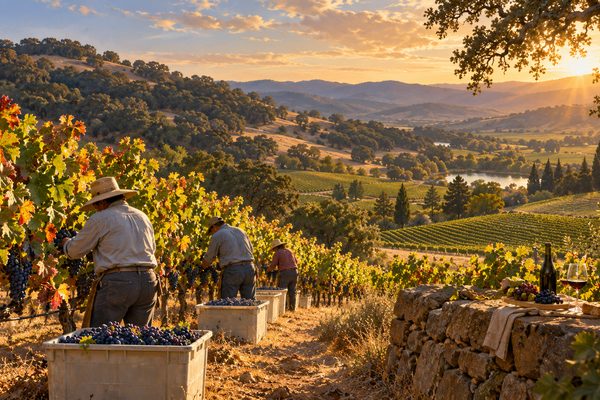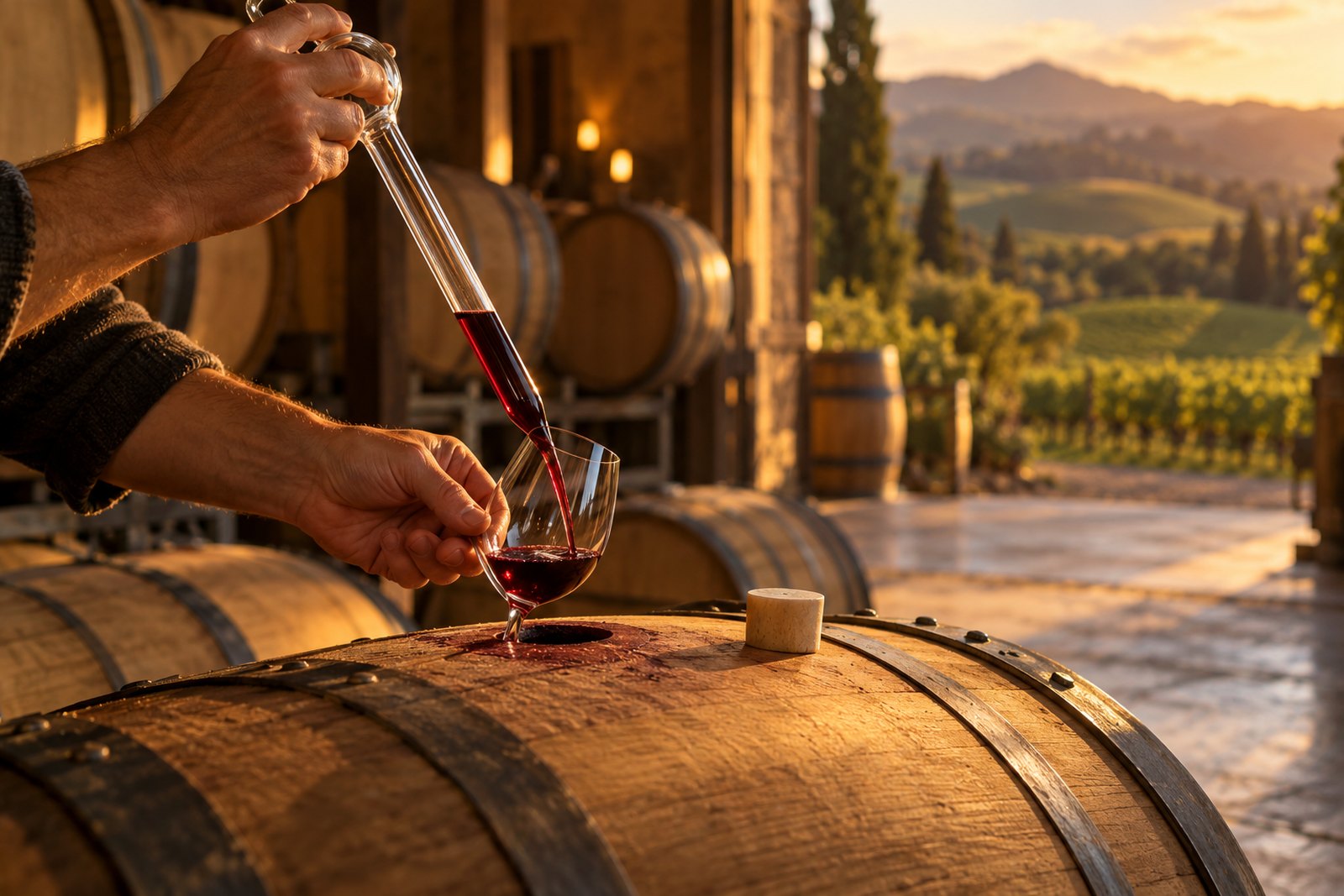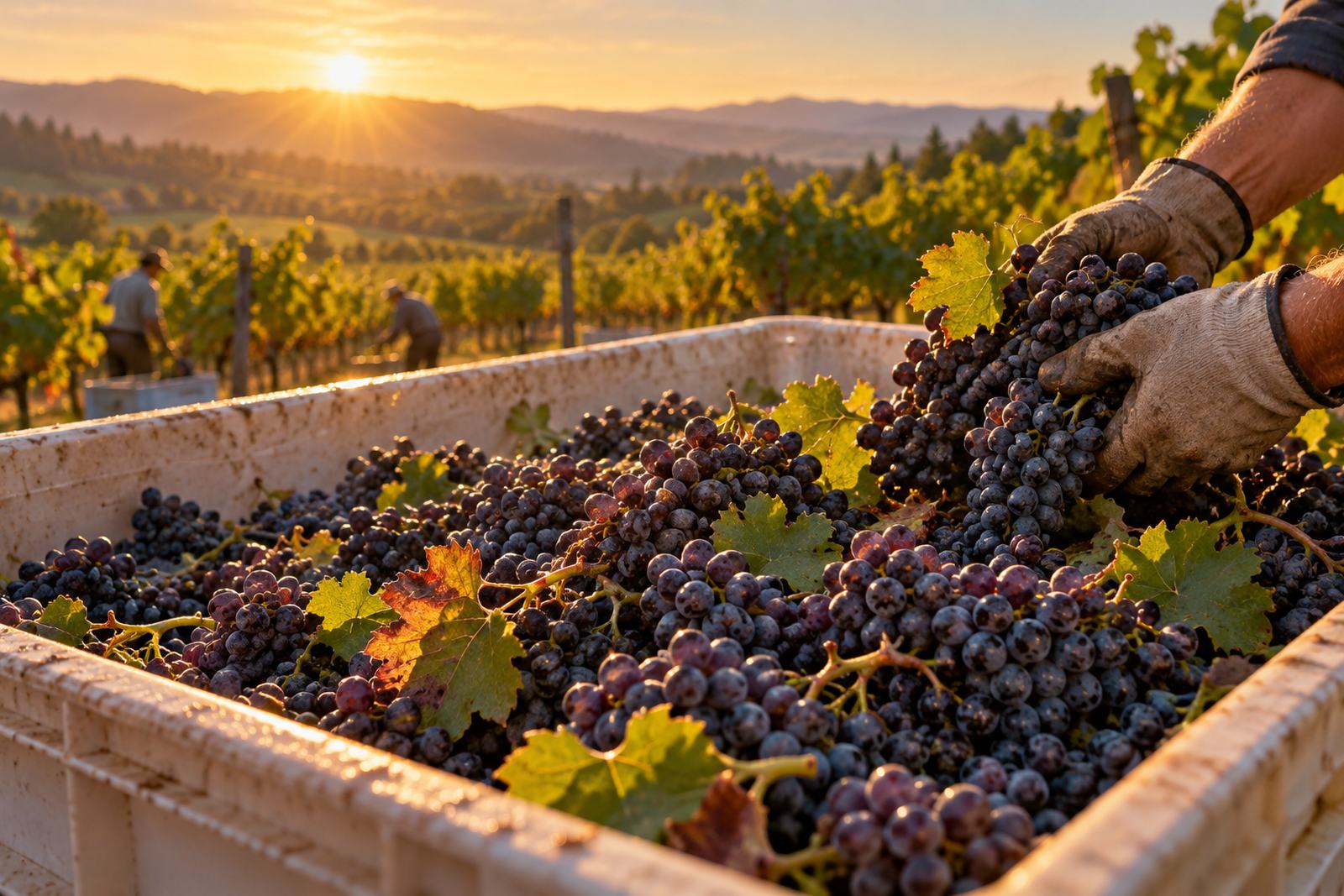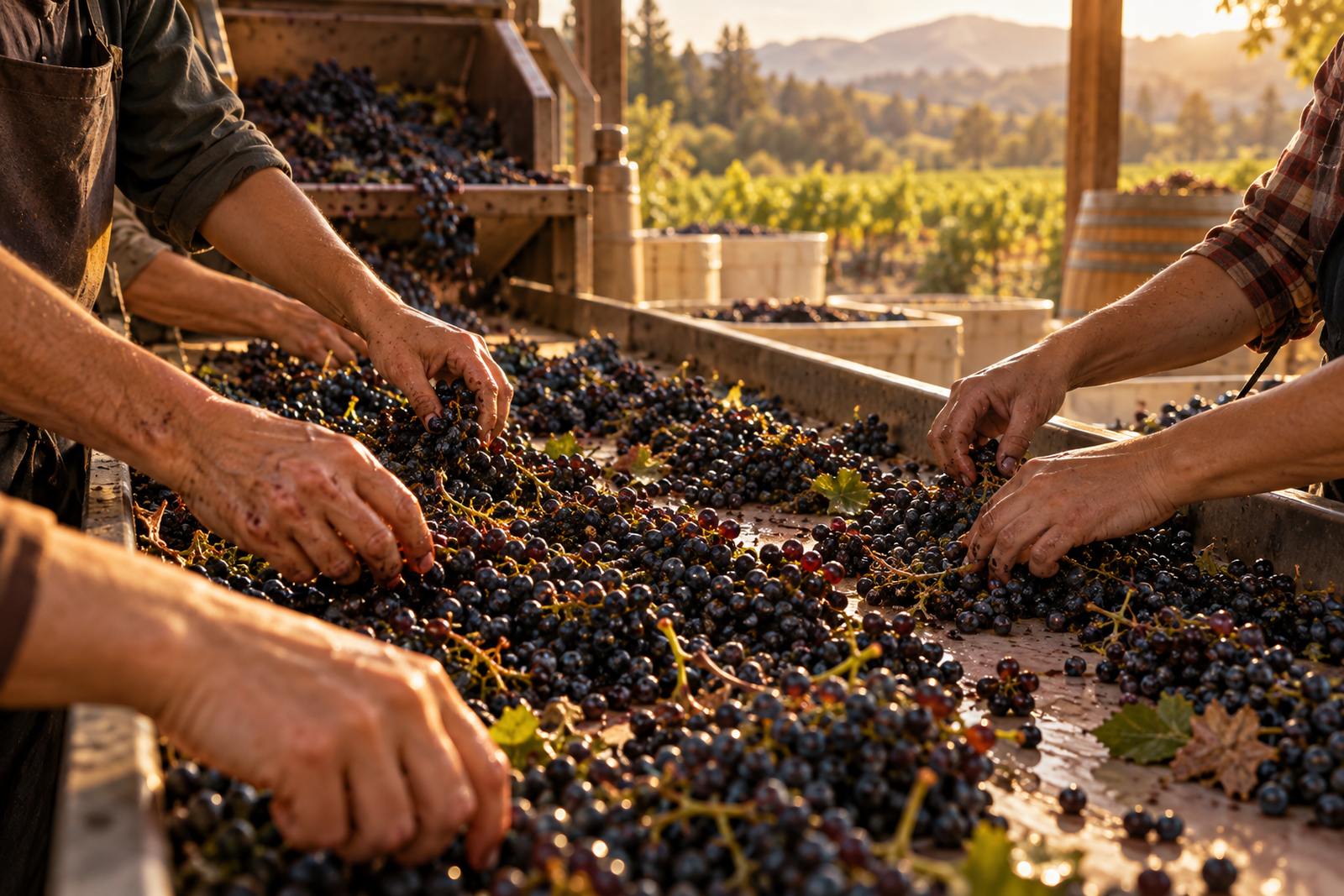
The Harvest Wine Trail is Wine Road's Saturday in the middle of crush. A single ticket opens the tasting rooms of member wineries spread across the Alexander, Dry Creek and Russian River valleys, and you plot your own course between them. There is no fixed itinerary and no host to follow: pick a valley, pick a handful of doors, and taste what each winery has chosen to pour that day. It is one of Wine Road's seasonal wine trails, and this one is timed for harvest, when picking and crush are under way across northern Sonoma County.

The Harvest Wine Trail is Wine Road's Saturday in the middle of crush. A single ticket opens the tasting rooms of member wineries spread across the Alexander, Dry Creek and Russian River valleys, and you plot your own course between them. There is no fixed itinerary and no host to follow: pick a valley, pick a handful of doors, and taste what each winery has chosen to pour that day. It is one of Wine Road's seasonal wine trails, and this one is timed for harvest, when picking and crush are under way across northern Sonoma County.

Harvest is the liveliest season in wine country, and a trail day lets you feel it from the tasting room side without booking a single appointment. With no reservations to juggle, you can linger where a conversation takes off and move on when you are ready. Putting a Dry Creek Zinfandel stop and a Russian River Pinot Noir stop in the same afternoon shows how different neighboring valleys can taste. Bring a designated driver or hire a ride, choose three or four wineries, and the day takes care of itself.
Wine Road, Northern Sonoma County, is the member association of wineries and lodgings in the Alexander, Dry Creek and Russian River valleys, and it runs these seasonal wine trails.
Visit organizer site →Wine Road, the association behind the Harvest Wine Trail, took shape in 1976 around one determined promoter. Millie Howie, a writer and publicist, saw that the backcountry wineries of northern Sonoma County were barely known to visitors, and she persuaded their owners to work together.
Their first joint project was a simple map showing where each member could be found. From it grew the Russian River Wine Road, the name the group carried in its early years, and in time the seasonal events that still bring visitors down its roads.
2027 lineup coming soon
Pick and add wineries to map your route.

Alexander Valley Vineyards
›

Making estate wine in the heart of the appellation since 1975, on land the Wetzel family has farmed since 1962. The Cyrus, a Bordeaux-style blend, is the flagship, with Cabernet Sauvignon and Zinfandel rounding out a reliable portfolio. Family-owned across three generations, with a charming 19th-century schoolhouse tasting room on Highway 128.

ACTA Wine
›

Dustin Moilanen co-founded ACTA with his family in spring 2021 on a 16-acre Highway 128 estate, opening hospitality in autumn 2023 after extensive renovation. Small-production lots, often just a few barrels, under the motto ACTA NON VERBA: deeds, not words. Tasting lounge, vineyard patio, estate olive grove, and organic gardens.

J. Rickards Winery
›

A working family farm at the northern end of Alexander Valley, 45 sustainably farmed acres on Chianti Mountain, including 1908 Zinfandel vines still producing. Jim and Eliza Rickards bought the ranch in 1976 and revived the old vineyard; the winery launched in 2005. The Darn Fine Brown Barn anchors a hospitable visit.

Pech Merle Winery
›


Soda Rock Winery
›

Soda Rock is the historic Alexander Valley store and post office, site of the first bonded winery in 1880. Ken and Diane Wilson restored it in 2000; the facility burned in the 2019 Kincade Fire, but the century-old barn survived. Bordeaux varietals from Wilson vineyards across Alexander and Dry Creek.

Optima Winery
›

Peterson Winery
›

West Wines
›

Dry Creek Vineyard
›

Founded in 1972 by David Stare, a Loire-inspired Bostonian who drove his family west, the first post-Prohibition bonded winery in Dry Creek Valley, the first to plant Sauvignon Blanc here, and the first to label an American wine 'Meritage.' Still family-owned. The Fumé Blanc is the benchmark; bocce and a garden patio.

Pedroncelli Winery
›
Giovanni and Julia Pedroncelli bought this Geyserville property in 1927, with 25 acres of Zinfandel and a former winery that had spent Prohibition as a barn. Four generations later, the family sustainably farms about 100 acres. The tasting room stays unpretentious: seated flights indoors or on the outdoor patio, and a bocce court.

Balletto Vineyards
›
The Balletto family has farmed the Sebastopol Hills since 1977, growing vegetables before turning to grapes in the 1990s. Today they farm certified-sustainable vineyards across Russian River Valley and West Sonoma Coast. Winemaker Anthony Beckman's Pinot Noir, Chardonnay, and Pinot Gris are known for over-delivering on value.

Limerick Lane Cellars
›


Foppiano Vineyards
›

Founded in 1896 by Giovanni Foppiano, a Genoa Gold Rush immigrant. The family survived Prohibition selling winemaking kits; a 1926 raid dumped 100,000 gallons into a creek. In 1967 Louis J. Foppiano released the winery's first Petite Sirah bottling, the house's longtime anchor. Owned by Courtney Benham's CMB Wines since 2024.

Sunce Winery
›
Founded in 1991 by Croatian-born Frane Franicevic, who brought a winemaking tradition from the Dalmatian coast; he and his wife Janae renamed it Sunce in 1998. The estate sits on Olivet Road, head-pruned vines beside the Zora's Pinot Noir block. Sunce, 'sun' in Croatian, makes small lots; Frane often hosts personally, pouring twelve to thirty wines.

Pezzi King Vineyards
›

Rockpile Vineyards
›
The Rockpile AVA has no public tasting infrastructure, so the Wilson Artisan Wineries family brought the wines down off the mountain. The lounge sits in downtown Healdsburg, steps from the Plaza, pouring Rockpile-AVA flights from the 800-acre mountaintop ranch above Lake Sonoma. Zinfandel-driven, with Bordeaux and Petite Sirah folded in.